

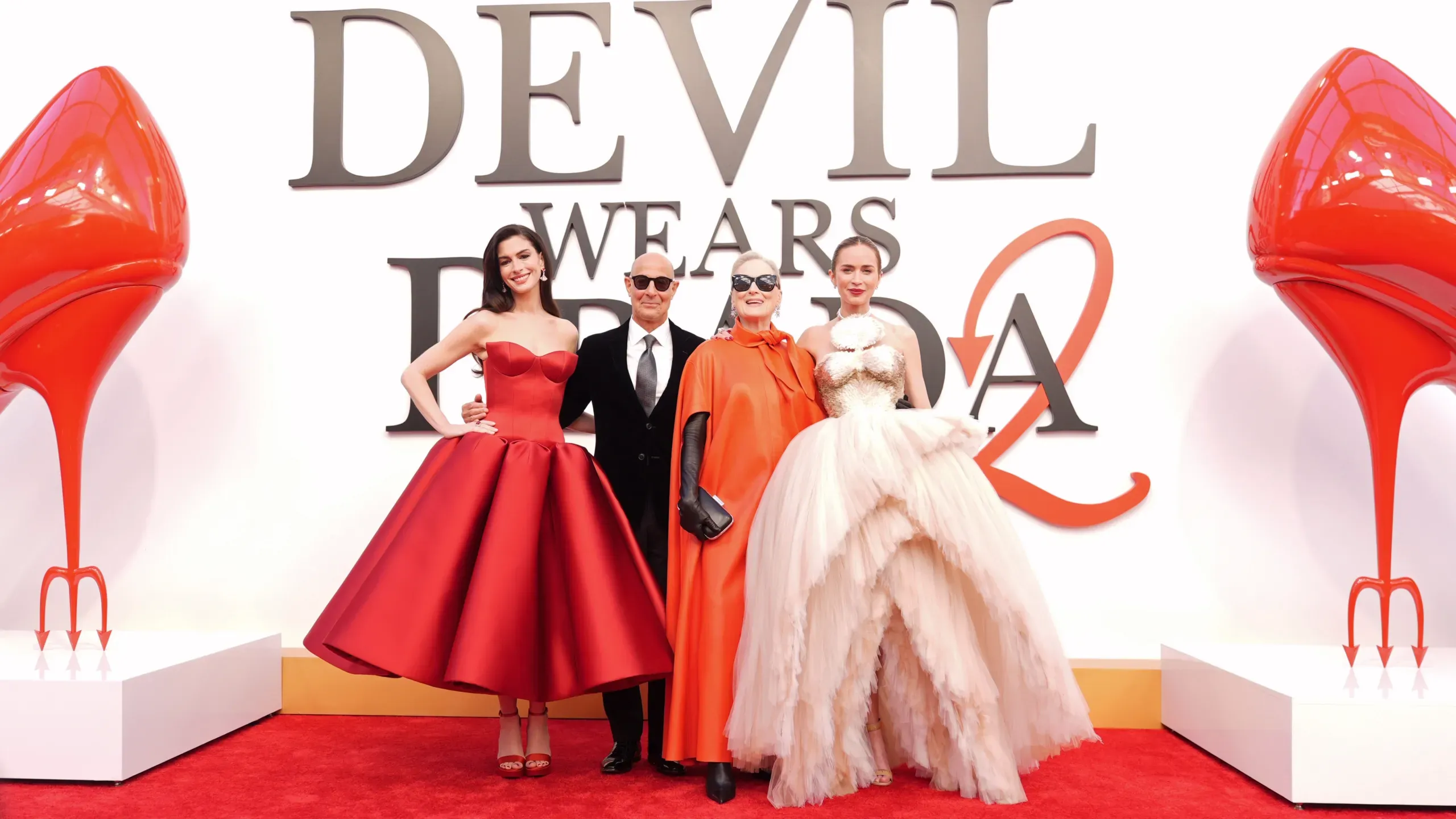
The Devil Wears Prada 2 Is Already a Fashion Event
Bonjour fashion lovers,
there are films that come back, and then there are films that never really leave, because in the meantime they remain suspended in the collective imagination, as a constant reference, a permanent citation, a visual grammar that fashion has never truly stopped using. The Devil Wears Prada has always belonged to that second category. And perhaps that is exactly why The Devil Wears Prada 2, even before officially arriving in theaters, is already behaving like a true fashion event.
It is not just a matter of nostalgia, although nostalgia certainly plays its part. It is also about the fact that we are living in a time when fashion needs, more than ever, to recognize its own myths, to bring them back into circulation, to turn them once again into a shared language. And very few myths, over the past twenty years, have had the same power as Miranda Priestly, Andy Sachs, and that precise, cruel, sparkling, irresistible way of portraying the fashion system as a theater where everything matters, even the smallest detail pretending not to matter at all.
In recent days, something has ignited around the film that goes far beyond simple promotion. The cast’s looks, from Anne Hathaway to Meryl Streep and Emily Blunt, have taken over fashion conversations the way a miniature fashion week might. They are not simply showing up on a red carpet, they are building a narrative. Every appearance seems to say the same thing, in different ways: The Devil Wears Prada 2 is not just a sequel, it is a universe still demanding attention, desire, commentary, and participation.
And this is where the conversation becomes truly interesting. Because the viral success of this return says a great deal about the present. It tells the story of a fashion world that keeps looking ahead, yet still feels the need to return to the places where it once felt most powerful, most recognizable, most iconic. It tells the story of an industry that is now fragmented, fast, and overcrowded with images, yet still hungry for strong symbols.
And perhaps there is something even more revealing beneath all of this. Perhaps the immediate success of The Devil Wears Prada 2 also tells us that fashion, today, has an almost desperate need for its own cinematic imagination in order to feel grand again. In a saturated, rapid, image-heavy present, where visuals are consumed in the time it takes to scroll, cinema gives fashion back what social media can no longer fully guarantee: scale, myth, hierarchy, anticipation. It gives it a stage. It gives it a legend. Most of all, it gives it that sense of importance the fashion system continues to chase, even when it pretends it only wants to be contemporary, accessible, and immediate.
And perhaps that is also why Miranda Priestly continues to exert such a powerful fascination. Not simply as a character, but as a cultural figure. As a silhouette of power. As the embodiment of an idea of fashion made of authority, selection, distance, and vision. In a time when everyone speaks, everyone shows themselves, everyone comments, Miranda still represents the icy allure of someone who does not need to explain herself too much. And perhaps that is exactly what continues to seduce us, because she belongs to an idea of prestige that now feels almost lost, and for that very reason, even more desirable.
But the point is not only her. The point is that this sequel arrives at a moment when fashion is constantly questioning itself, its audience, its language, its relationship with luxury, with digital culture, with entertainment. And so The Devil Wears Prada 2 suddenly becomes perfect, because it offers fashion the chance to look at itself in the mirror through a story it already knows, but can reinterpret with different eyes. No longer just as a glamorous fantasy, but as a reflection on what it means today to desire a world that is, by definition, inaccessible.
That is also why the press tour is working so well. It is not just promotion, it is storytelling, it is memory made present. The cast is not simply recalling an imaginary world, it is reactivating it, restaging it, offering it once again to a global audience in an updated form, more self-aware, more spectacular, perhaps even more strategic. And the audience responds the way it always does when fashion rediscovers one of its best narratives: by watching, sharing, commenting, and desiring.
And yet, precisely while watching all of this excitement unfold, I cannot help but feel a certain fear as well. Because the risk, whenever a beloved imaginary world is revived, is always that it may become a faded copy of itself. After all, that is exactly what happened with And Just Like That, which was supposed to tell, with the same mood and the same style, the lives of Carrie, Miranda, Charlotte, and even Samantha, though off-screen. And yet, at least in my eyes, it too often turned into a caricature of its own myth, a shallow version of itself, a simple succession of outfits provided by brands rather than a truly credible extension of that universe.
And that is exactly what I fear for The Devil Wears Prada 2. I fear a weak, unconvincing operation, too aware of its own iconic status, too busy referencing itself instead of actually telling something meaningful. I fear that the film may settle for putting clothes, callbacks, nostalgia, and visual luxury on display, without fully restoring that tension, that precision, that elegant cruelty that made the first The Devil Wears Prada so much more than a film about fashion.
Because the point is not simply to bring back characters we once loved. The point is to make them live again in a believable way. And when that does not happen, the risk is immediate: not the return of a myth, but its reduction to costume.
Perhaps that is where everything is at stake. Between the desire to rediscover an imaginary world we once loved, and the fear of seeing it emptied out, turned into surface, into operation, into content packaged with too much self-awareness. And that is why, yes, I am looking forward to The Devil Wears Prada 2, but with enthusiasm and suspicion at once. Because when certain myths are touched, the line between homage and caricature is razor-thin.
Emanuela Formoso – Founder & Editor, The Fashion Lover.
Always fashion, always black. Always Paris.
Recent
Articles
Recent
-
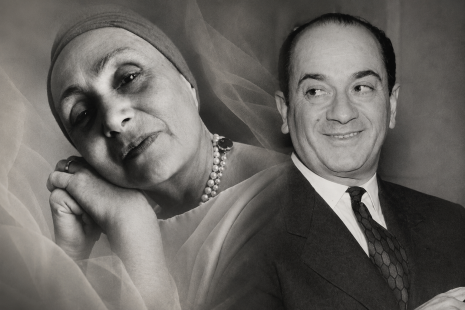
Jean Dessès and Madame Grès: The Two Haute Couture Legends My Mother Introduced Me To
-
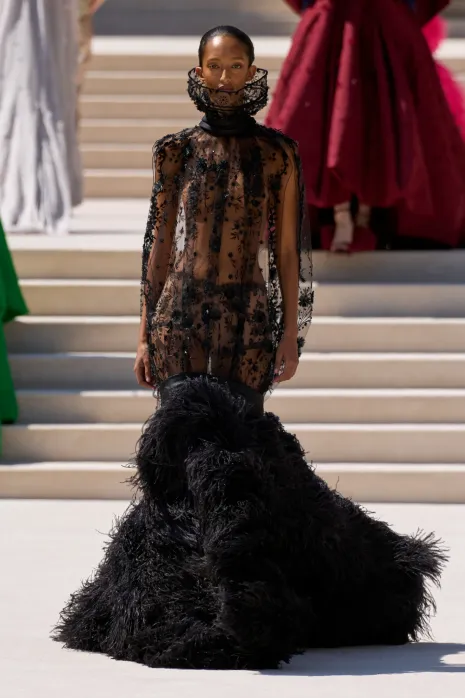
Why Haute Couture Still Makes Me Dream?
-
Dua Lipa’s Italian Summer Look
-
Why I Still Love Sex and The City
-
Why does someone choose to buy a fake designer bag?
-
Fashion Nostalgia: Are We Still Dreaming or Just Looking Back?
-
Fashion News at the Speed of Light: Gucci in Formula 1, Achille Lauro at Dondup, Givenchy’s New Chapter and Blake Lively’s Beauty Collapse
-
Luxury Can't Exist Without Human Hands
-
Laetitia Casta in Armani - Cannes Film Festival 2026
-
Audemars Piguet x Swatch And The Luxury Industry’s Obsession With Pop Culture
