

Balenciaga: Pierpaolo Piccioli, Martine Rose and the Luxury of Time
Bonjour fashion lovers,
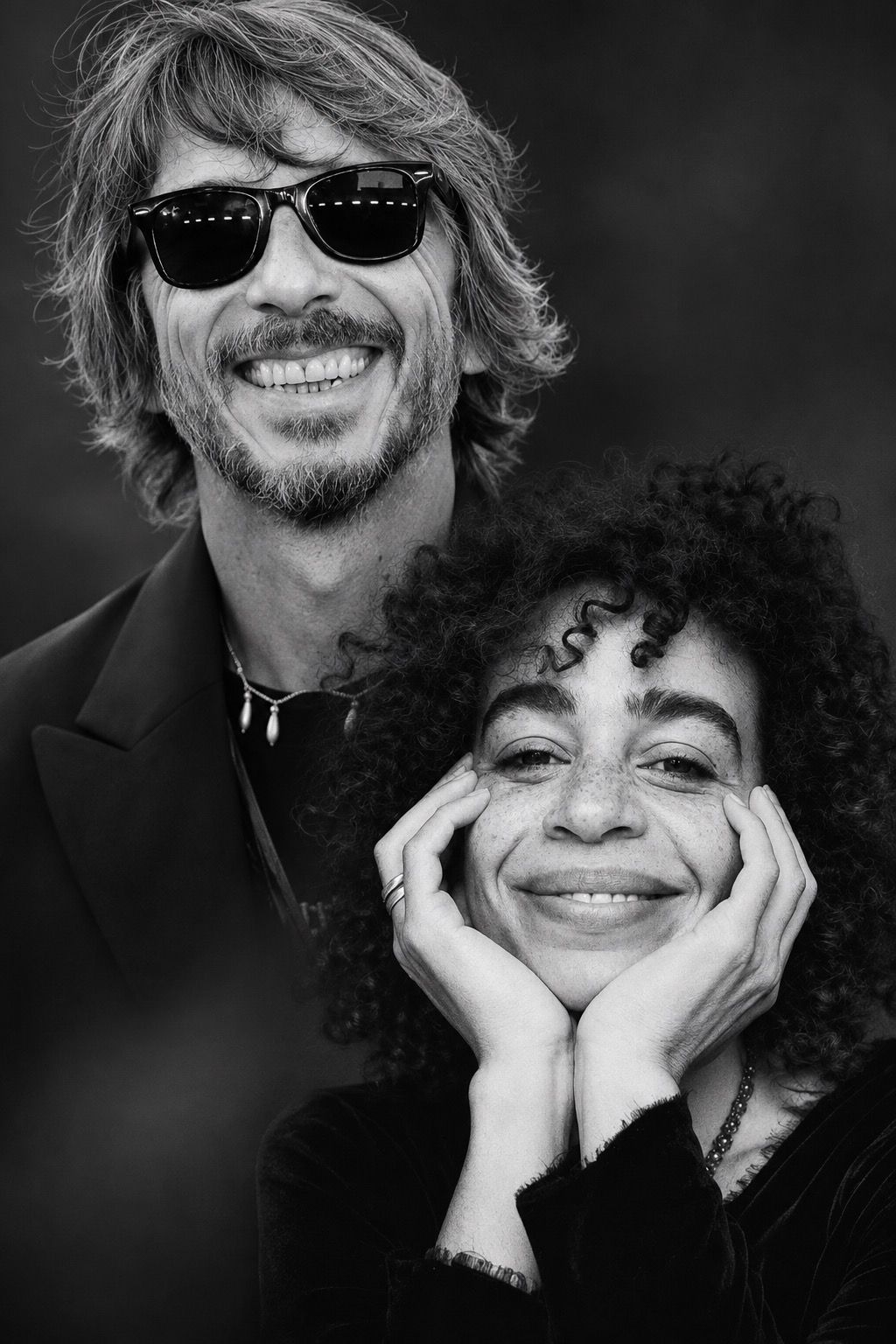
There are some news stories that, even after so many years of following the fashion world, still manage to leave me completely speechless. Pierpaolo Piccioli is leaving Balenciaga after just sixteen months as Creative Director of the maison. Three seasons and a project that, at least in my eyes, still had so much to offer. On November 5, Kering officially announced its separation from the Italian designer and, the following day, the appointment of Martine Rose as the new Creative Director. Two announcements in quick succession that have reopened a question I have been reflecting on for some time: how much room is creativity really given within today's major fashion houses?
I loved Piccioli's work, his sensitivity, his approach to couture, and his extraordinary ability to give clothing an artistic dimension. His arrival at Balenciaga represented an important change, a new interpretation of the maison's identity, one more closely connected to sartorial craftsmanship and the legacy of Cristóbal Balenciaga. After ten years of Demna, who had radically transformed the house's image through a provocative aesthetic deeply rooted in streetwear, Piccioli represented an entirely different vision. And this is precisely what leaves me perplexed. Why choose a designer with such a distinctive creative identity, only to bring his journey to an end after just three seasons? Naturally, not all his creations received the same level of praise, but such a profound transformation would have required time, experimentation, and above all, continuity.
In its official statement, Kering expressed its deep gratitude to Piccioli, acknowledging his contribution to reaffirming the maison's couture roots. Words of great appreciation (sincere?), which nevertheless fail to explain the reasons behind such a sudden departure. The international fashion press has also responded to the news with differing interpretations. On one hand, some consider this change an understandable strategic decision, driven by the need to reconnect with the younger audience Balenciaga attracted during the Demna era. On the other, some question the growing incompatibility between designers' artistic visions and the commercial demands of major luxury groups. These are interesting perspectives, but I continue to believe that attributing a fashion house's success or difficulties solely to the work of its Creative Director is an oversimplification. Fashion is also a business, of course, but building a recognizable identity takes far more than a few seasons.
And then there is something else I personally find increasingly bewildering: the endless succession of sudden departures from major fashion houses. I must admit that Anthony Vaccarello's departure from Saint Laurent had already left me deeply perplexed. Ten years during which he built an extraordinarily consistent identity, transforming his vision into an instantly recognizable language. A creative direction I loved and followed with particular interest. Then came the news of Seán McGirr's departure from Alexander McQueen, after just three years, and now Piccioli. Three designers, three different experiences, three departures within a matter of weeks. And all within the same group, Kering. Naturally, each situation has its own reasons, but it is difficult not to see this succession of changes as a sign of a profound transformation in luxury fashion strategies. And I wonder how much all of this can truly benefit the identity and creative continuity of these fashion houses.
This brings us to Martine Rose, Balenciaga's new Creative Director. An undoubtedly interesting choice. The British designer has built her reputation through an unconventional approach to contemporary fashion, reinterpreting the codes of streetwear with a sensibility influenced by subcultures, music, and urban aesthetics. She is no stranger to Balenciaga, having previously worked with Demna, and her appointment seems to suggest a return to the more experimental, culturally connected language that characterized the maison in previous years. Part of the fashion press has welcomed this decision enthusiastically, recognizing Rose's considerable influence on contemporary menswear and her original creative vision. Personally, I am curious to see how she will interpret Cristóbal Balenciaga's legacy and, above all, how she will reconcile her own aesthetic language with the maison's couture heritage. I certainly do not consider her appointment a wrong decision, but that does not erase my concerns about the end of Piccioli's tenure. One designer's talent does not necessarily have to be measured against another's.
What concerns me most is how normal we are beginning to consider these constant changes. Every new Creative Director is introduced as the beginning of a new era, every debut is surrounded by enormous expectations, and every collection seems expected to prove the value of an entire creative project immediately. Then, after just a few seasons, everything can change once again. But a fashion house cannot survive on announcements and new beginnings alone. It needs an identity, a recognizable vision, and the continuity that allows its audience to understand its evolution and develop a genuine connection with its creative language. Above all, it needs designers who are given the time to develop their work. We cannot demand innovation, originality, and immediate results without accepting that creativity also requires experimentation, mistakes, and time to mature.
I do not want to idealize the past or suggest that a Creative Director should remain at the helm of a fashion house regardless of results. That would be unrealistic. However, I believe there is a fundamental difference between a project that does not work and a project that is never given the time to work. And today, more than ever, that distinction seems essential to me. I sincerely hope that Martine Rose will have the opportunity to fully develop her creative vision, and that Pierpaolo Piccioli will soon find a new professional chapter worthy of his extraordinary talent. I will continue to follow Balenciaga's evolution with interest, but also with the same sense of perplexity I increasingly feel when witnessing the constant changes taking place within the major fashion houses. Because fashion needs innovation, certainly, but it also needs identity, continuity, and respect for creative work. Above all, it needs time.
Three seasons. Just three seasons.
Recent
Articles
Recent
-
Balenciaga: Pierpaolo Piccioli, Martine Rose and the Luxury of Time
-
My First Fashion Pill as a Petrolhead
-
Anthony Vaccarello Leaves Saint Laurent: The End of a Perfect Match?
-
Ferragamo Holiday 2026: The Joy of Loving
-
Vogue World Milan 2026
-
Did I Really Miss Fashion?
-
Finding My Way Back
-
Jean Dessès and Madame Grès: The Two Haute Couture Legends My Mother Introduced Me To
-
Why Haute Couture Still Makes Me Dream?
-

Dua Lipa’s Italian Summer Look
