Anthony Vaccarello Leaves Saint Laurent: The End of a Perfect Match?
Bonjour fashion lovers,
Those of you who follow me know that over the past few months, I went through a period when I felt the need to slow down, step away from everything for a while and, above all, find my centre again. I wrote about it in my article. Today, I'm feeling better and better, and little by little, I'm rediscovering the pleasure of writing about what I love most: fashion.
There is one piece of news, however, that I hadn't yet managed to properly address. Anthony Vaccarello's departure from Saint Laurent. I briefly mentioned it on Instagram, but that was all. And even weeks later, it remains a decision I still cannot understand, let alone accept.
Over the past few years, we have witnessed a relentless game of musical chairs at the helm of the major fashion houses, driven by commercial strategies, revenues, percentages and growth expectations. But for me, Vaccarello's case is different. I have devoted countless articles to his work, his vision and what I have always considered an almost perfect connection with Saint Laurent's identity. Those of you who have been following me know perfectly well that his work and creativity have earned a very special place among my personal favourites as a fashion lover. Because in my eyes, Anthony Vaccarello was not simply the creative director of the house. Anthony Vaccarello had become Saint Laurent.
When I think about his work, what comes to mind first is his extraordinary ability to understand the legacy of the master, Yves Saint Laurent, without becoming trapped by it. That is no small achievement. Leading a fashion house with such a powerful and important history means constantly confronting an archive that can be an endless source of inspiration, but also a limitation. You can choose to reproduce it faithfully, risking turning every collection into an exercise in nostalgia, or move so far away from it that the brand becomes unrecognisable. Vaccarello, in my opinion, had found an exceptionally rare balance: he respected the house's codes while making them profoundly contemporary.
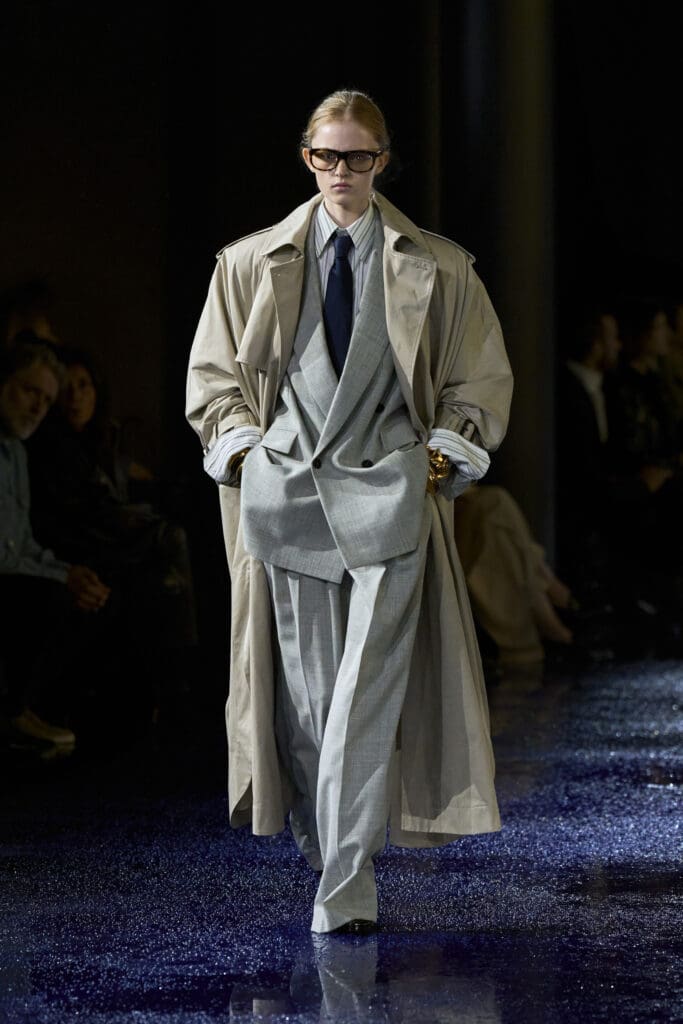
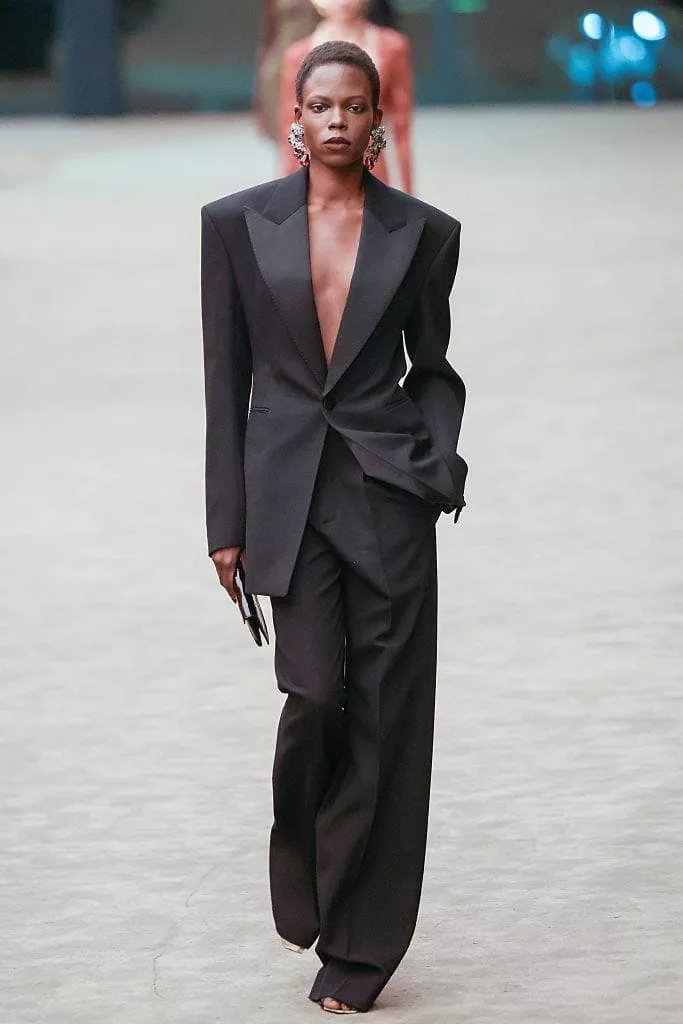
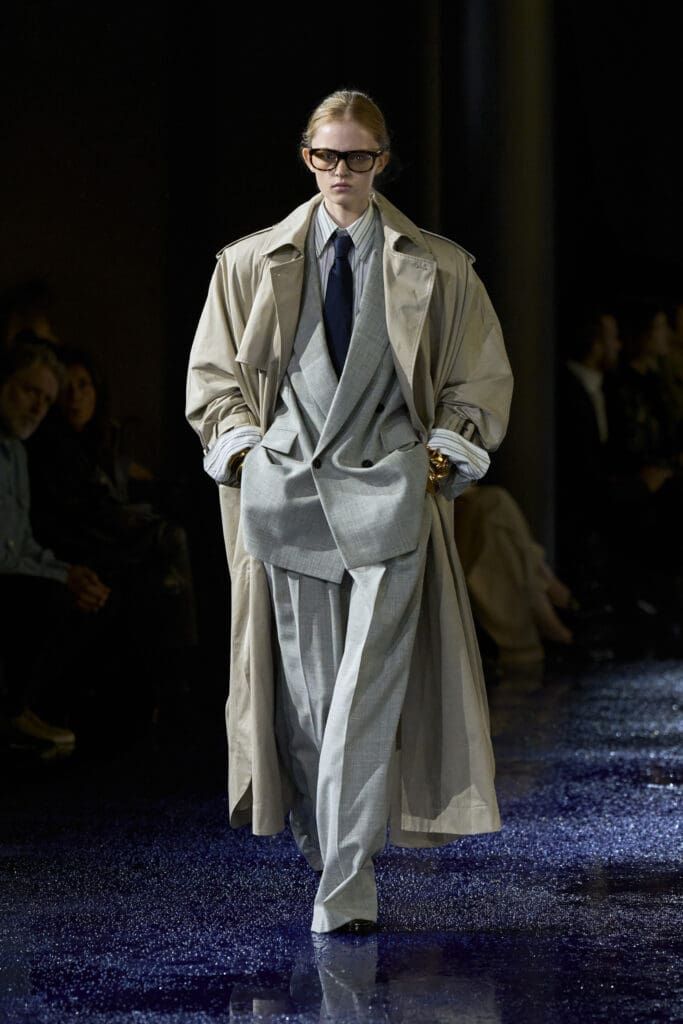
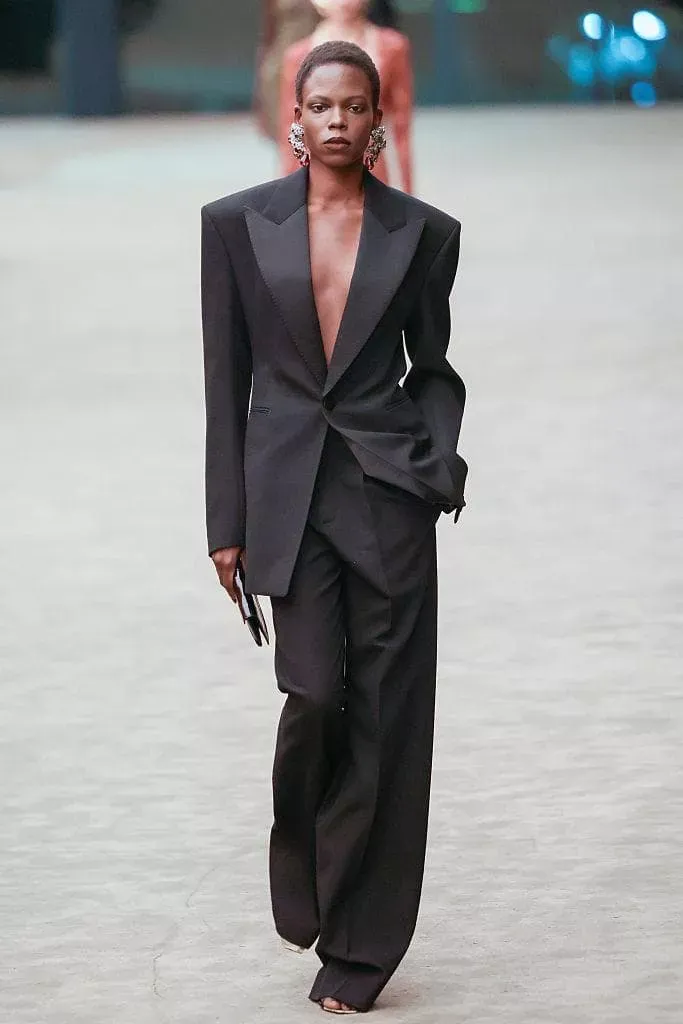
Take the tuxedo, one of the most revolutionary symbols of the women's wardrobe created by Yves Saint Laurent. In Vaccarello's hands, it was never simply a reference to the archives. It remained a statement of style and independence. Structured shoulders, impeccably tailored trousers, sharp silhouettes, rigorous proportions. Recently, I had the pleasure of seeing a tuxedo from his penultimate collection up close, and I can assure you I would have given almost anything to wear it (although I'm not ruling out the possibility that I still might). His tailoring had extraordinary strength, yet it never lost the sensuality I consider inseparable from the identity of the master, Saint Laurent. And perhaps that is precisely the point: Vaccarello understood that discipline and seduction are not necessarily opposites. They can coexist and, indeed, enhance one another, as they did throughout his collections.
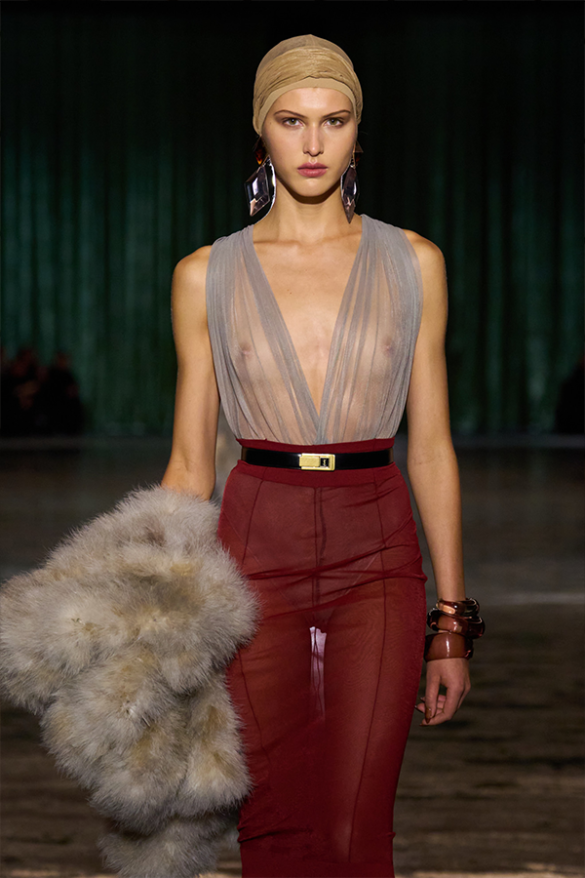
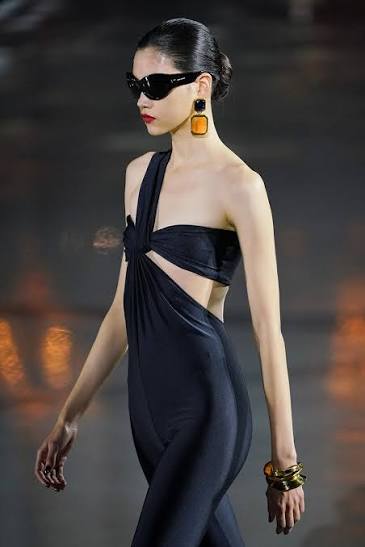
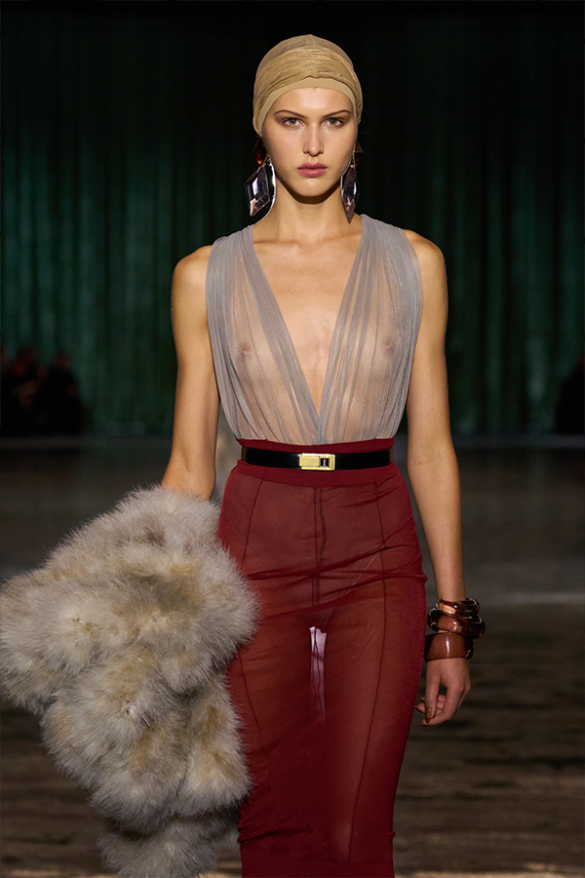
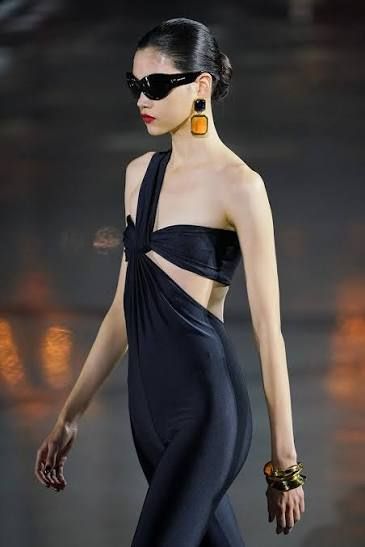
His woman never had to choose between elegance and provocation. She could wear a masculine tuxedo or a sheer dress, a pencil skirt or a daringly short miniskirt, a jacket with monumental shoulders or a gown that revealed much of her body. The wardrobe changed, but the attitude never did. She was always a woman confident in herself, fully aware of her sensuality, her allure and her seductive power.
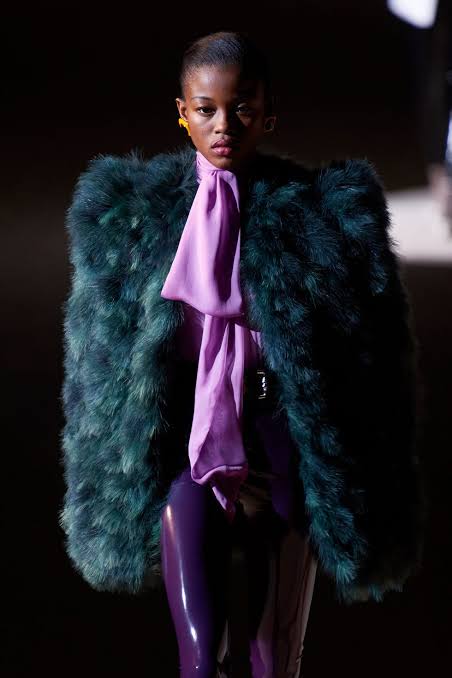
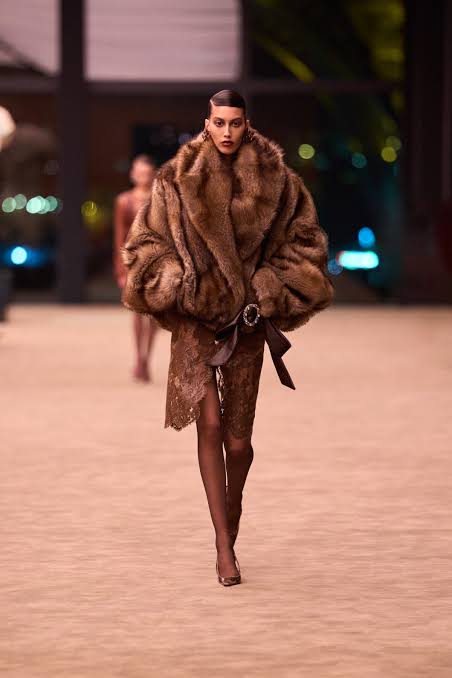
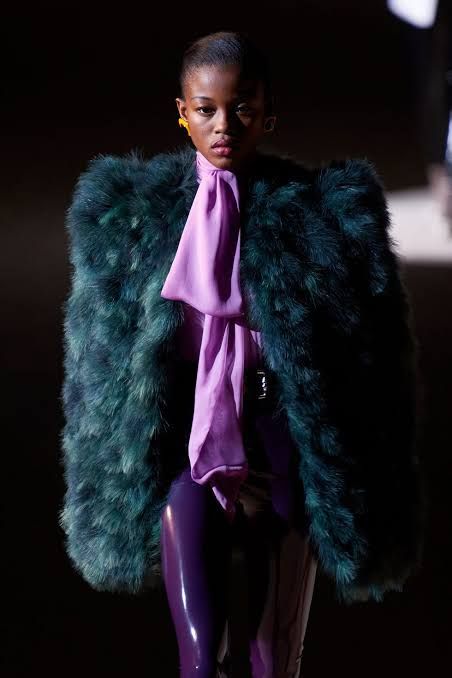
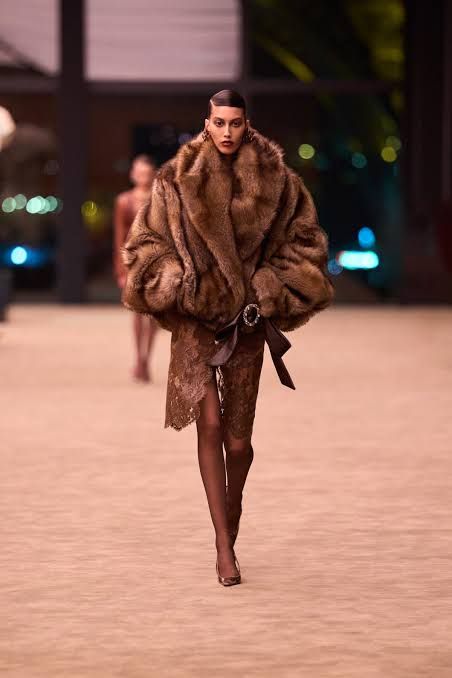
I have always loved his relationship with black, naturally, but reducing Vaccarello's Saint Laurent to a succession of black dresses, leather and sheer fabrics would be far too simplistic. His exploration of materials was much more interesting. The rigidity of leather met the lightness of chiffon, velvet conversed with glossy surfaces, and precise tailoring contrasted with the fluidity of a dress. Even when he embraced bold colours, dramatic volumes or statement jewellery, the result remained instantly recognisable. One glance at a silhouette was enough to think: Saint Laurent by Vaccarello.
And then there was androgyny, another fundamental element of the universe created by Yves. Vaccarello preserved its spirit without turning it into a formula. His connection with Betty Catroux, an iconic figure in the history of the house, says a great deal about that continuity. In this world, masculine and feminine were never rigid categories, but languages to be mixed freely. A jacket could be more sensual than a plunging dress. A perfectly tailored pair of trousers could express more personality than any embellishment.
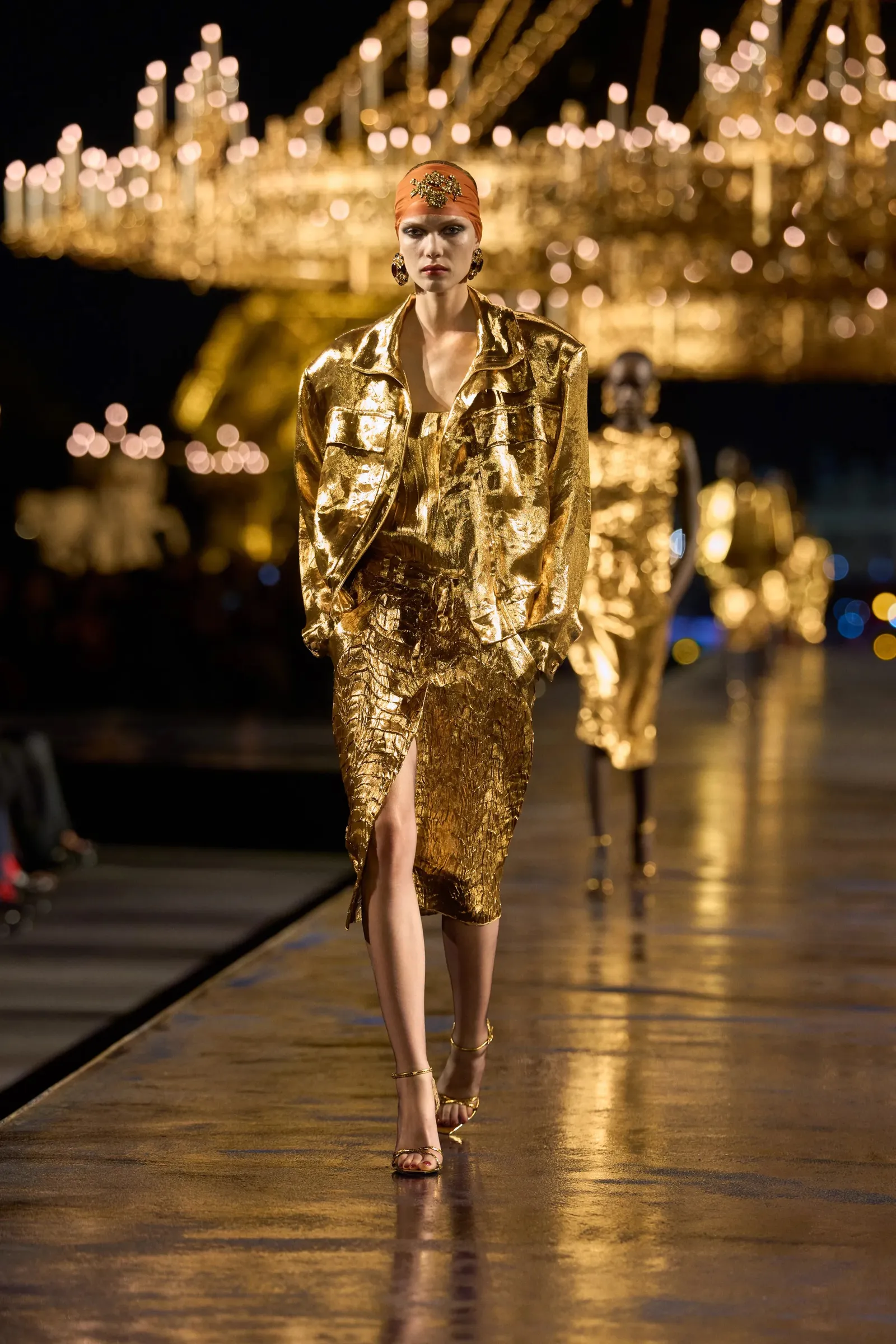
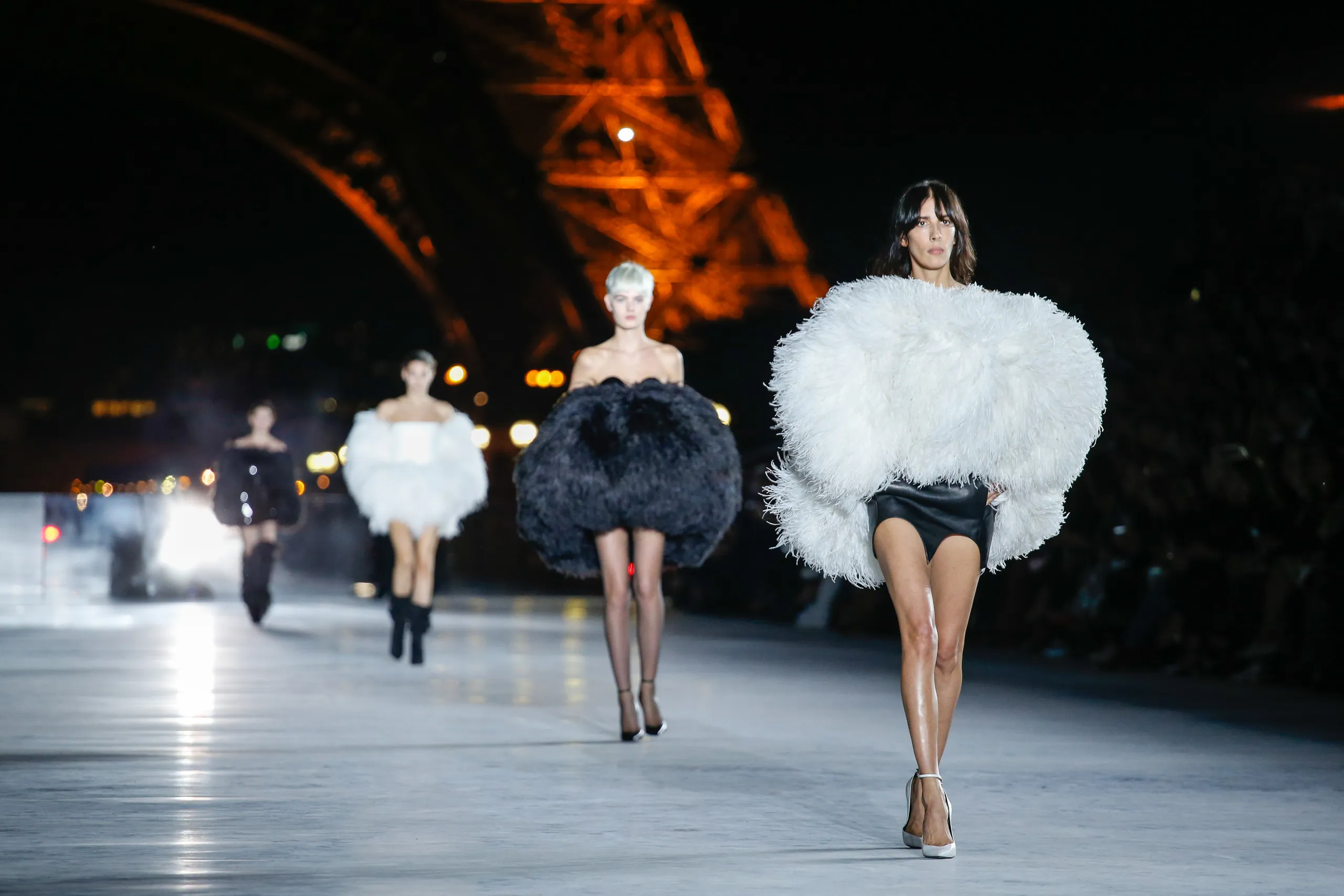
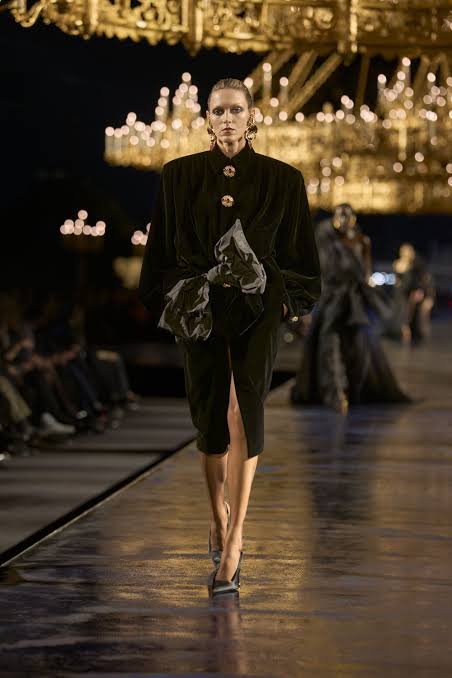
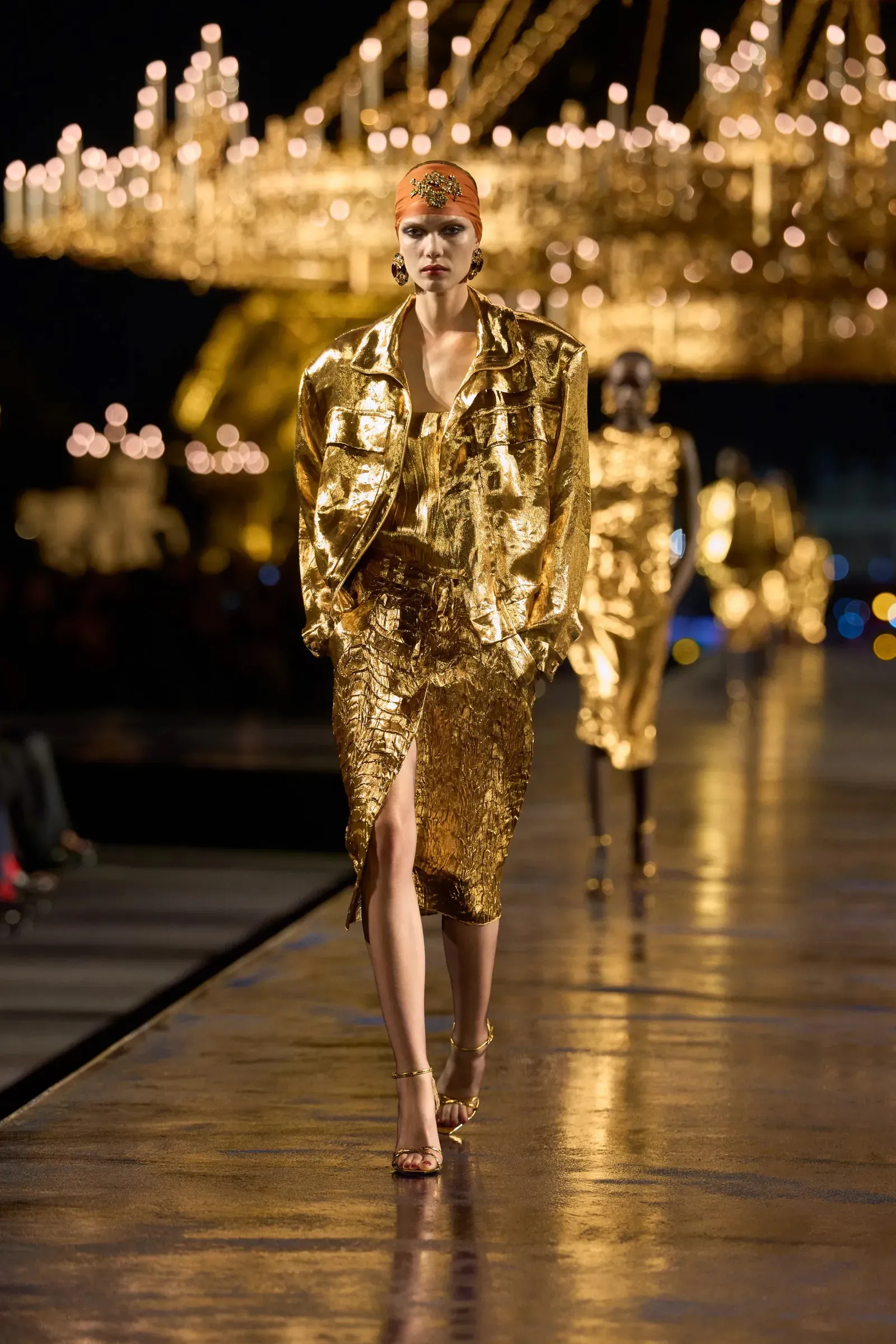
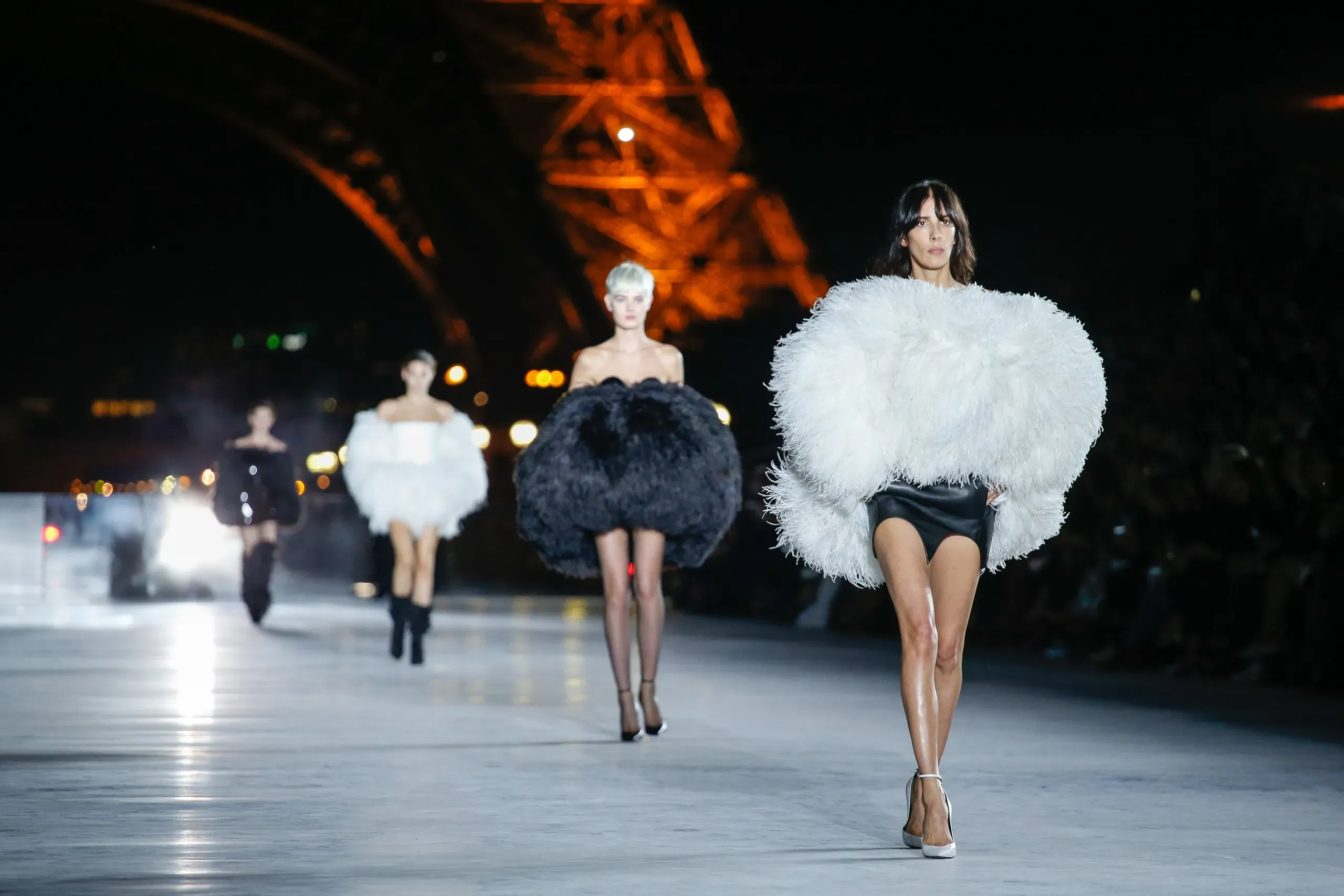
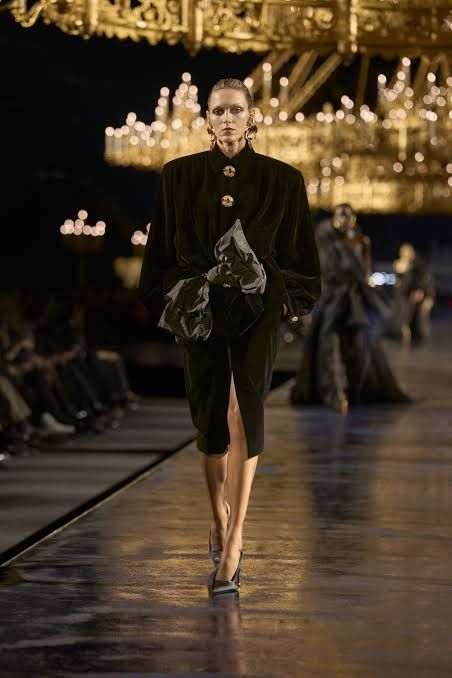
But his work extended far beyond the collections. Vaccarello helped build a Saint Laurent universe that went beyond clothing. The Parisian fashion shows, often staged against the backdrop of the Eiffel Tower at the Trocadéro, had become instantly recognisable events, even for those who did not follow fashion on a daily basis. My Paris was never merely a spectacular backdrop: it was part of the story, his story. And how could I not mention his farewell show, where gold made an overwhelming statement beneath enormous, theatrical chandeliers? Then there was Saint Laurent Rive Droite, the dialogue with photography, art, design and, above all, cinema. Through Saint Laurent Productions, the house entered the world of film production itself, a project I find particularly meaningful because it restores to fashion a cultural dimension we too often risk forgetting.
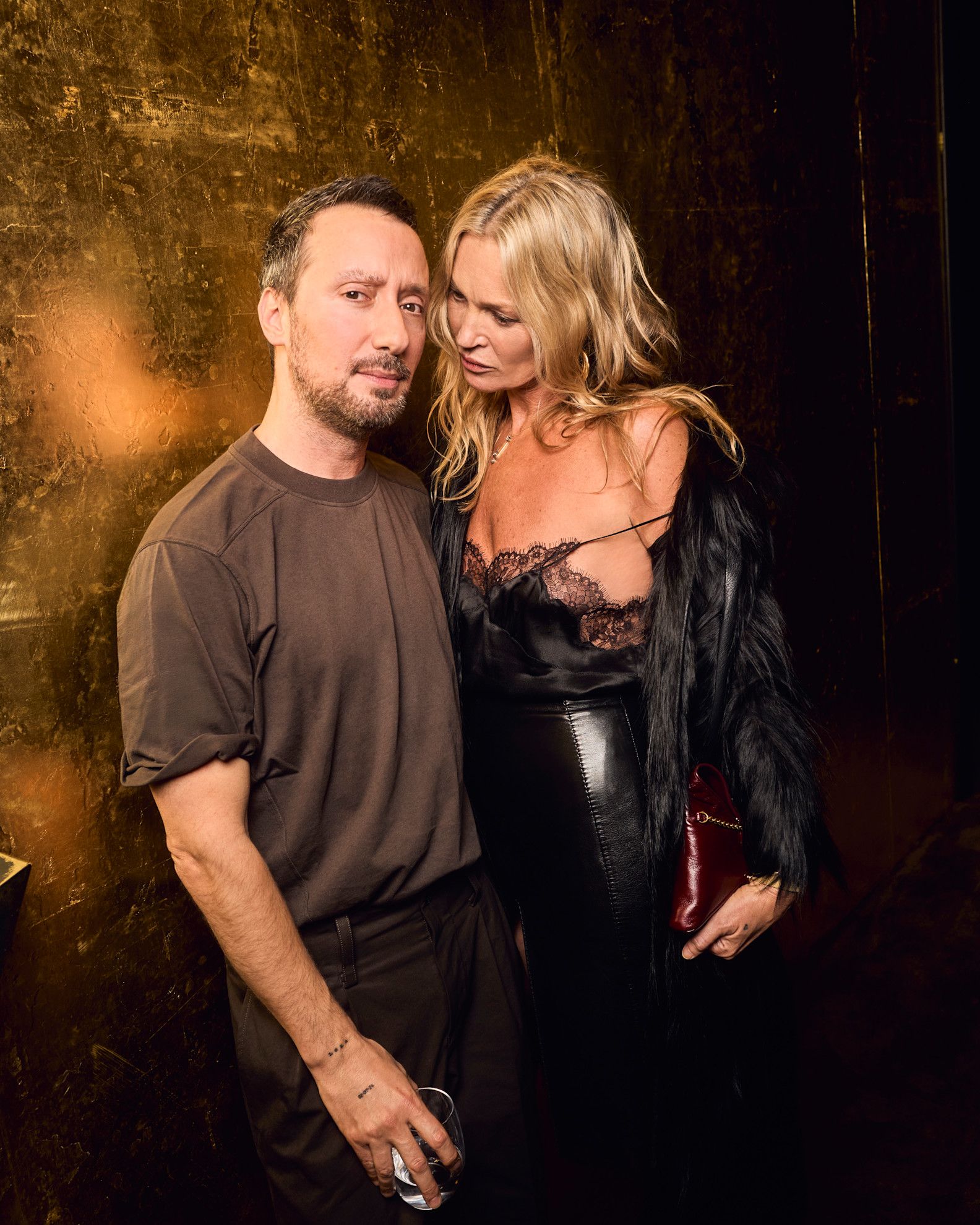
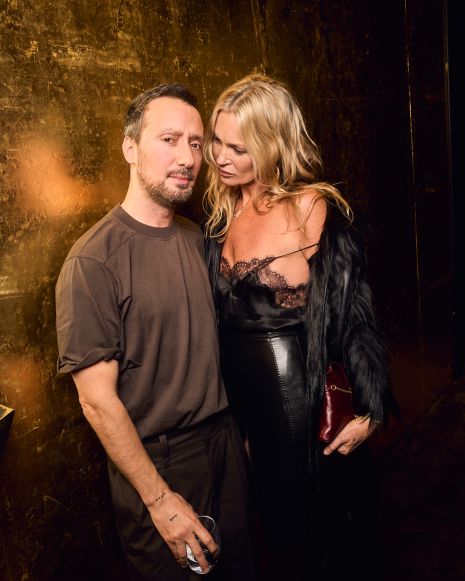
It was never simply about selling clothes or accessories. It was about creating an entire world. And Vaccarello had a very clear vision of that world. I also think of the women who represented Saint Laurent during his tenure, from Charlotte Gainsbourg to Zoë Kravitz, from Anja Rubik to Kate Moss. Different personalities, united by an attitude that needed no explanation. They were not merely famous faces associated with a brand. They belonged to a coherent aesthetic universe.
Of course, ten years as creative director do not mean ten years of equally successful collections. I have never believed that a designer should be considered infallible, not even someone I have admired, and continue to admire, as deeply as Vaccarello. Some proposals can be more convincing than others, certain silhouettes may feel repetitive, and some creative choices will inevitably divide opinion. But there is an enormous difference between repetition and consistency. And I believe that throughout his tenure, Vaccarello demonstrated just how difficult it is to maintain a recognisable vision while allowing it to evolve.
That is also why his departure leaves me so perplexed. We have become accustomed to reading about creative directors arriving, making their debuts, being celebrated and, after only a few seasons, moving on to make room for someone else. Every change is presented as the beginning of a new era, every debut as a revolution, every appointment as the answer to the demands of the market. But how many revolutions can a fashion house go through before it risks losing something of its own identity?
I am not suggesting that financial considerations do not matter. That would be naive. Major fashion houses belong to international groups, with commercial responsibilities, employees, investors and growth targets. Creativity and business have always coexisted in fashion, even when we prefer to tell ourselves otherwise. And I do not know the private reasons behind the separation between Vaccarello and Saint Laurent. It would be unfair to attribute this decision exclusively to financial figures or corporate strategies without evidence.
But precisely because I understand the importance of these dynamics, I keep wondering how much value is placed today on something that cannot be measured through a balance sheet alone: the continuity of a creative vision.
Vaccarello did not merely preserve Yves Saint Laurent's legacy. He interpreted it through his own sensibility, making it part of the house's contemporary language. And that, in my opinion, is a far rarer achievement than a successful collection or a handbag destined to become a bestseller.
Perhaps that is why I still find it so difficult to accept his departure. Not because I believe Saint Laurent cannot exist without Anthony Vaccarello. The history of the house is infinitely greater than any creative director, and it will continue long after him. But because, at a time when fashion seems obsessed with the need for constant change, I wonder whether we are underestimating the value of what already works, of what has a clear identity, of what does not need to be endlessly reinvented to prove that it is still relevant.
I have always believed that great creative partnerships are among the most fascinating aspects of fashion. Those rare encounters in which a designer does not simply fill a position, but finds a fashion house with which to establish a genuine dialogue. For me, the relationship between Anthony Vaccarello and Saint Laurent was one of those encounters.
And that is precisely why, even now, I still find it so strange to imagine Saint Laurent without him.
Recent
Articles
Recent
-
Anthony Vaccarello Leaves Saint Laurent: The End of a Perfect Match?
-
Ferragamo Holiday 2026: The Joy of Loving
-
Vogue World Milan 2026
-
Did I Really Miss Fashion?
-
Finding My Way Back
-
Jean Dessès and Madame Grès: The Two Haute Couture Legends My Mother Introduced Me To
-
Why Haute Couture Still Makes Me Dream?
-
Dua Lipa’s Italian Summer Look
-
Why I Still Love Sex and The City
-
Why does someone choose to buy a fake designer bag?